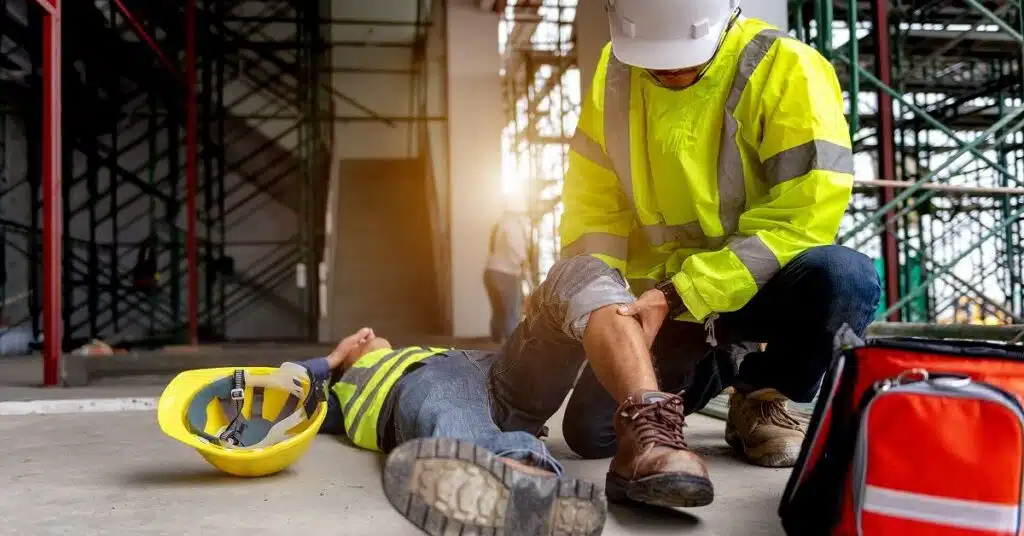
Construction Injuries in the UK: The Statistics, The Reality & Where First Aid Fits In
Written by Stephanie Austin, Founder & Lead Trainer at Prima Cura Training
Construction Injuries in the UK: The Statistics, The Reality & Where Construction First Aid Training Fits In
Construction is tough. It’s hands-on, physically demanding and often carried out in environments that are constantly changing. But while the graft is expected, injuries shouldn’t be.
And yet… they still happen.
According to the Health and Safety Executive (HSE), construction consistently ranks as one of the most dangerous industries in the UK. Year after year, the statistics make it very clear: this is a sector where preparation, prevention and rapid response are not optional extras.
So, What Do the Numbers Actually Say?
The latest figures from the HSE show that the construction industry accounts for a disproportionate number of workplace fatalities and serious injuries.
Some key headlines:
- Construction regularly represents around a quarter of all workplace fatalities, despite employing a much smaller percentage of the UK workforce
- Thousands of workers each year suffer non-fatal injuries requiring over 7 days off work
- The most common causes?
- Falls from height
- Being struck by moving objects
- Being struck by moving vehicles
- Trapped by something collapsing or overturning
Falls from height alone remain the leading cause of fatal injuries in construction, according to the HSE statistics published on 20th November 2025 (the most up-to-date statistics available).
Even on the safest, best-managed sites, accidents can still happen. Which is exactly why first aid training really is non-negotiable.
Construction Injuries: What Are We Talking About?
When we talk about construction injuries, we aren’t just talking about dramatic, headline-grabbing incidents.
We’re talking about:
- Severe bleeding from lacerations
- Crush injuries
- Fractures and dislocations
- Head injuries and concussions
- Eye injuries from debris
- Burns (electrical, chemical, friction)
- Cardiac arrest
- Heat exhaustion
- Sudden medical episodes (diabetes, asthma, epilepsy)
Many serious incidents don’t start catastrophically. A cut becomes catastrophic because bleeding isn’t controlled quickly enough. A fall becomes life-threatening because no one recognises a head injury. A collapse becomes fatal because CPR wasn’t started immediately.
Time really is critical on construction sites.
Under the Health and Safety Executive regulations, employers have a legal duty to provide adequate and appropriate first aid equipment, facilities and personnel.
This includes:
- A suitably stocked first aid kit
- An appointed person
- Or trained first aiders
The relevant legislation – The Health and Safety (First Aid) Regulations 1981
BUT Let Me Be Clear – A Box on the Wall Isn’t First Aid.
A Certificate From 10 Years Ago Isn’t Competence.
Why Construction Sites Need More Than “Someone Who’s Done It Before”
Construction environments are fast-paced, and on-site trade teams change; hazards evolve.
You might have:
- Subcontractors who don’t know each other
- New starters unfamiliar with site risks
- Lone workers
- Multi-level work areas
- Remote or partially developed locations
If someone falls from scaffolding, do your team know:
- How to assess consciousness safely?
- When not to move someone?
- How to control catastrophic bleeding?
- How to recognise shock?
Because the first few minutes after an incident are often the difference between recovery and a life-changing tragedy.
Having a First Aid Trained Team is a Safety Culture Signal
Having a team trained in emergency first aid, who are visible and confident, makes a hell of a difference on site.
It says:
- We take safety seriously.
- We don’t cut corners.
- We’re prepared.
And in construction, that mindset matters.
According to the Health and Safety Executive, many incidents involve human factors, decision-making, communication, and risk perception.
A workforce trained in first aid tends to be more aware overall. They spot hazards earlier. They challenge unsafe behaviour. They look out for each other.
It’s the contractor’s responsibility to build that culture.
The Legal Bit
Under HSE guidance, the level of first aid provision should be based on:
- The nature of the work
- The hazards and risks
- The size of the workforce
- Previous accident history
- Remote working considerations
Construction is classed as higher risk. That means a more robust first aid provision is usually required.
If your risk assessment hasn’t been reviewed recently, it might be time.
The official guidance can be found here:
https://www.hse.gov.uk/firstaid/needs-assessment.htm
So, Where Does Training Fit In?
This is where the rubber meets the road.
The Emergency First Aid at Work (1-day) Course is designed to equip individuals with the practical skills to respond confidently to:
- Unconscious casualties
- CPR and AED use
- Severe bleeding
- Shock
- Choking
- Minor injuries
On a construction site, these aren’t theoretical risks. They’re real-world possibilities.
It’s one day. But the impact can last a lifetime.
If someone collapses on site, you don’t want the response to be “Does anyone know what to do?”
You want calm. You want clarity. You want action. That’s what proper training provides.
Employers must take into consideration any high-risk activities within their first aid risk assessment. it may transpire that the one-day EFAW course is simply not enough. In this instance, the full First Aid at Work Qualification may be more suitable. Yes, it means more time away from the site; this is why we have blended options.
Whether it’s one, two or three days off the tools, let’s be honest, that’s a small price to pay for knowing what to do when it really matters.
Productivity can be made up. A life can’t.
Construction Will Always Carry Risk. But It Doesn’t Have to Carry Panic.
We can’t remove every hazard. Construction is inherently physical. But we can reduce the impact when something goes wrong.
Statistics from the Health and Safety Executive aren’t there to scare us; they’re there to inform us. The industry is improving. Fatalities have reduced significantly compared to decades ago. But we’re not done yet.
Every trained first aider on a site improves outcomes.
Every employer who invests in proper first aid training is strengthening their safety culture.
And every worker who knows what to do in an emergency becomes part of the solution.
If you work in construction and haven’t reviewed your first aid provision recently, now is definitely the time….
Book or Enquire
If you’re ready to book or would like advice on whether this is the right course for your workplace, get in touch. We’re happy to talk through your requirements and help you choose the most suitable training.
Disclaimer: This article is for general information purposes only and reflects UK guidance at the time of publication. It does not constitute legal, regulatory or health and safety advice. First aid provision must be based on your organisation’s specific risk assessment, workforce size, site hazards and working arrangements. Employers are responsible for ensuring compliance with the Health and Safety Executive (HSE) and the requirements of the Health and Safety (First Aid) Regulations 1981. Always refer directly to current HSE guidance and seek competent health and safety advice where appropriate.