Government Warning: Non-Sterile Alcohol-Free Wipes Linked to Infection Risk
Written by Stephanie Austin, Founder & Lead Trainer at Prima Cura Training
The UK Government has issued updated guidance warning of an ongoing infection risk linked to non-sterile alcohol-free wipes, following confirmed cases of Burkholderia stabilis infection in vulnerable patients.
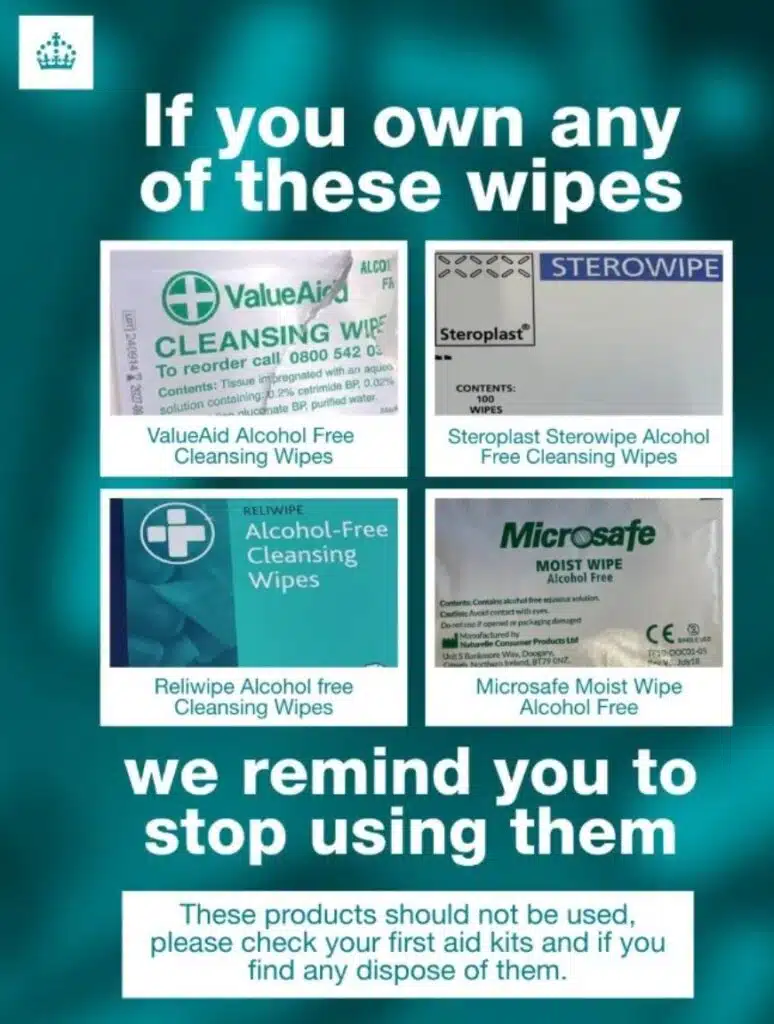
The guidance, published by the UK Health Security Agency (UKHSA), confirms that contaminated wipes were incorrectly used on broken skin and around medical devices. Although affected products have been withdrawn from sale, the risk remains where they are still held in first aid kits or care supplies.
Full Government guidance:
https://www.gov.uk/guidance/burkholderia-stabilis-infections-associated-with-non-sterile-alcohol-free-wipes-ongoing-risk-to-patients
What Is Burkholderia stabilis?
Burkholderia stabilis is a bacterium commonly found in soil and water. While it rarely causes serious illness in healthy people, it can lead to severe infection in clinically vulnerable individuals, including:
- People with weakened immune systems
- Individuals with long-term conditions such as cystic fibrosis
- Patients with intravenous lines or invasive medical devices
The outbreak, first identified in 2018, has now resulted in 59 confirmed cases, including bloodstream infections and one reported death.
Why Non-Sterile Alcohol-Free Wipes Are a Risk
Non-sterile alcohol-free wipes are designed for general skin cleansing only. They are not sterile and should never be used for:
- Cleaning open wounds
- Broken or damaged skin
- Intravascular or invasive medical devices
Using non-sterile products in these situations increases the risk of introducing bacteria directly into the body, particularly in care and clinical settings.
The Medicines and Healthcare products Regulatory Agency (MHRA) has worked alongside UKHSA to remove affected products and reinforce correct infection prevention guidance.
What This Means for Workplaces and Care Settings
This update is especially relevant for organisations providing:
- Health and social care
- Home care and supported living
- Education and childcare
- Workplace first aid provision
Recommended actions include:
- Reviewing first aid kits and care supplies
- Removing any non-sterile alcohol-free wipes
- Ensuring only sterile products are used on wounds or broken skin
- Refreshing staff training on infection prevention and product use
Staying Compliant with Current UK Guidance
Updates like this highlight how everyday products can quickly become a compliance risk if they are misunderstood or misused.
At Prima Cura Training, we actively monitor updates from Government departments, regulators, and professional bodies. Whenever new guidance has the potential to affect workplace safety, infection control, or regulatory compliance, we update our training and notify our clients accordingly.
This ensures the advice we deliver reflects current UK best practice, not outdated guidance.
If you want reassurance that your first aid provision, infection control measures, or staff training align with the latest UK standards, we’re always happy to help.
This article is provided for general informational purposes only and reflects guidance available at the time of writing. It is not a substitute for formal infection prevention policies, clinical advice or workplace risk assessments. Always follow your organisation’s procedures, current UK health and safety guidance, and the manufacturer’s instructions when selecting and using first aid supplies.