Would You Know Anaphylaxis if You Saw It?
So, what does anaphylaxis look like? and how we should respond when every second counts.
One of the biggest risks with anaphylaxis isn’t just the reaction itself, it’s hesitation.
People aren’t always sure what they’re seeing, and that uncertainty can delay lifesaving action.
So, what is anaphylaxis?
Anaphylaxis is a severe, potentially life threatening allergic reaction. It usually comes on rapidly and can affect the airway, breathing, and circulation. In some cases, symptoms escalate within minutes.
It can be triggered by things we all encounter every day, such as foods, insect stings, medications, or latex, and it doesn’t always look the same from one person to the next. That very unpredictability is exactly why awareness is so important.
What does anaphylaxis look like?
Sadly, there isn’t one single sign that confirms anaphylaxis, making it tricky to spot. Instead, it’s often a combination of symptoms, and they can appear suddenly and worsen quickly.
Some of the key red flags to watch for include:
Swelling of the tongue, lips, face, or throat
This can lead to difficulty speaking or swallowing and is a major warning sign that the airway may be at risk.
Breathing problems
Wheezing, coughing, shortness of breath, or a feeling of tightness in the chest should always be taken seriously.
Circulation issues
Dizziness, fainting, collapse, or a sudden drop in blood pressure can indicate the body is going into shock.
Skin changes
Hives, flushing, redness, or itching are common,
It’s important to remember that not all anaphylactic reactions present with a rash.
Key thing to remember is that:
If the airway, breathing, or circulation are affected after exposure to a known or suspected allergen, treat it as anaphylaxis.
What should you do?
When anaphylaxis is suspected, speed saves lives.
The response needs to be immediate and confident.
Here’s what to do:
Call 999 straight away
Don’t wait!
Tell the operator you suspect anaphylaxis, this helps ensure the right level of response.
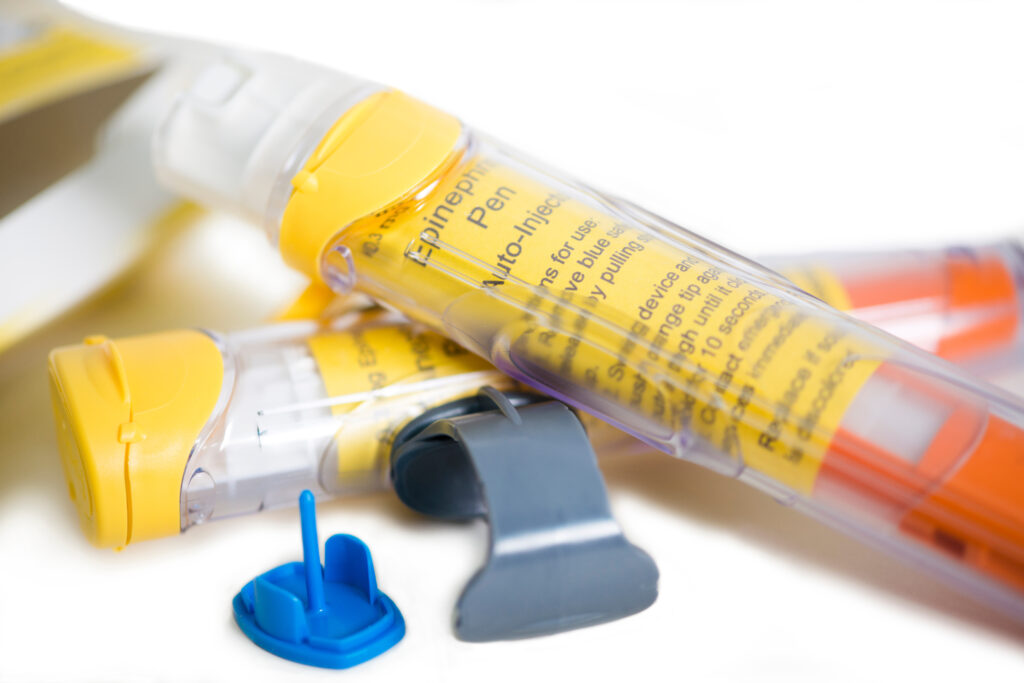
Use an adrenaline auto-injector or new style nasal spray, if one is available
Adrenaline is the first line treatment. If the person has been prescribed an auto injector, help them use it immediately.
Position the person correctly
- Lay them flat and raise their legs to help circulation
- If they’re struggling to breathe, they may prefer to sit upright
- If they’re unconscious but breathing, place them in the recovery position
- If they stop breathing, start CPR
A second dose may be needed
If symptoms don’t improve after five minutes, or worsen, a second adrenaline dose can be given if available.
And just as importantly – Staystay with them until help arrives.
Why this matters more than ever
With newer, more compact adrenaline treatments now entering the market, there’s real hope that more people will feel able to carry their medication consistently, and that’s. That’s a huge step forward.
But medication alone isn’t enough.
Anaphylaxis is one of those medical emergencies where recognition and early action make all the difference. Whether you’re a parent, teacher, colleague, carer, or first aider, knowing what to look for & having the confidence to act can genuinely save a life.
At Prima Cura, this is why we place such emphasis on real-world scenarios in our training. Because when emergencies happen, you don’t rise to the occasion — you fall back on what you know.
If this post helps even one person recognise anaphylaxis sooner or respond without hesitation, then it’s been worth writing.
Stay informed, stay prepared,
Engage, Educate, Empower
We offer Anaphylaxis Awareness courses. We also cover Anaphylaxis as standard in all of our First Aid courses including our Emergency First Aid, First Aid at Work, Paediatric First Aid, and OFSTED & EYFS courses.
Contact us to find out how we can help you gain the skills to save a life


