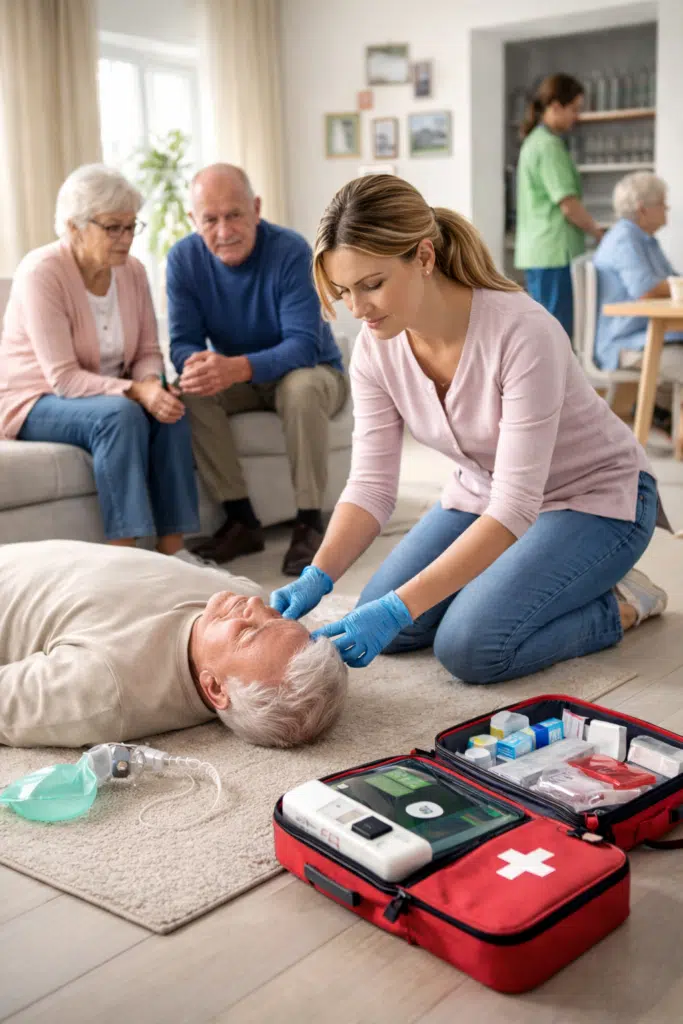
Why Generic First Aid Training Isn’t Always Suitable for Social Care Settings
Written by Stephanie Austin, Founder & Lead Trainer, Prima Cura Training
First aid training is a sound starting point. Most providers know they need it. But in social care, generic training often falls short of what’s truly needed for safe, compassionate, compliant practice. This is why first aid training for social care must be adapted.
This isn’t about blame. It’s about fit: the right training for the right environment, aligned with the Care Quality Commission (CQC) expectations and Health and Safety Executive (HSE) guidance.
Social care isn’t the same as a standard workplace
In many industries, first aid training focuses primarily on basic workplace injuries. In social care, you’re dealing with people who may have:
- chronic conditions
- cognitive impairment such as dementia
- epilepsy and seizure activity
- swallowing or aspiration risk
- diabetes and hypo or hyper episodes
These aren’t “office incidents”. They’re real, care‑based emergencies.
What the Regulators Expect
The Care Quality Commission (CQC) expect every care provider to comply with;
Regulation 12 – Safe Care and Treatment
Providers must ensure care is delivered safely, including assessing and managing risks. Training must support safe care.
Regulation 18 – Staffing
Providers must ensure staff are suitably skilled, competent, and supported with appropriate training.
Together, these regulations make it clear that training must be relevant and staff must be able to apply it in practice.
The Risk with Generic Training
Generic first aid courses often focus on:
- minor workplace injuries
- idealised scenarios
- limited context
Care settings require staff to respond to choking, seizures, deterioration, falls, and complex needs.
Certificates alone do not demonstrate competence.
What Good Care Appropriate Training Looks Like
Effective training in social care:
- reflects real scenarios
- links to policies and care plans
- builds confidence and competence
- supports inspections and audits
- is refreshed regularly
Why ‘Fit for Purpose’ Matters
CQC inspectors look for evidence that:
- risks are understood
- Staff are competent
- training supports safe decision‑making
If staff cannot explain or demonstrate what they would do, training may not be appropriate.
Tailored Training for the Care Sector
At Prima Cura Training, we specialise in delivering training that is genuinely relevant to the care sector. Our courses are tailored to reflect the realities of care settings, including residential care, domiciliary care, supported living and day services.
Training is designed to align with Skills for Care guidance and current UK best practice, ensuring learners gain knowledge and confidence that supports both quality care and regulatory expectations. Content is kept up to date with current guidance and focuses on practical application, not just theory.
Where appropriate, we adapt our first aid training to reflect:
- Care sector roles and responsibilities
- Safeguarding and duty of care considerations
- Policies, procedures and risk assessments used in care settings
- The needs of people receiving care
This approach helps ensure training is meaningful, compliant and directly applicable to day-to-day practice in the care sector.
Disclaimer: This article is for general information purposes only and reflects UK guidance at the time of review. It does not constitute legal or regulatory advice. First aid provision in social care settings must be based on your organisation’s individual risk assessment, service user needs, and current regulatory expectations, including guidance from the Health and Safety Executive (HSE) and oversight from the Care Quality Commission (CQC). Always ensure your training arrangements are appropriate, documented, and aligned with current UK legislation and sector standards.


