Why WAVE Training Matters for Security Staff in Licensed Venues
Written by Stephanie Austin — Owner & Lead Trainer, Prima Cura Training
Last reviewed: March 2026 | Next review: March 2027
Two door supervisors walked into one of my WAVE sessions with their arms folded before I had said a word. You know the type. Decades of experience between them, seen everything, heard every training pitch going. Within ten minutes, one of them had said it out loud, almost as a challenge: “Once they’re out the door, they’re not our problem.”
I didn’t argue with him. I asked him to stay with that thought for the rest of the session.
By the end, both of them had changed their position completely. Not because I lectured them. Because we worked through real scenarios together, and they arrived at the answer themselves. I’ll come back to that.
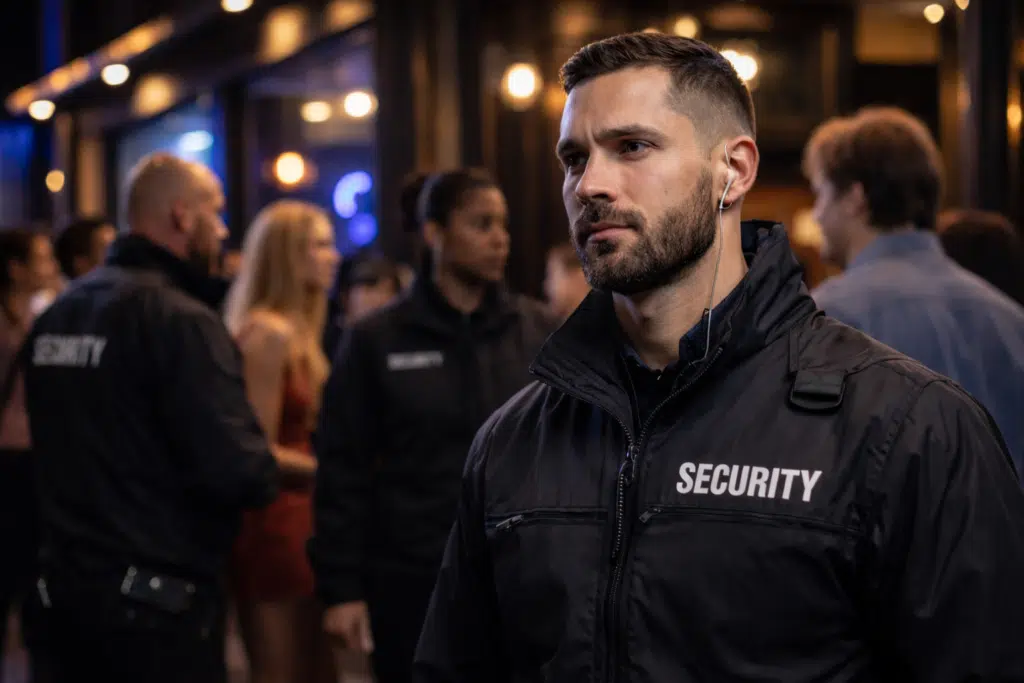
When people think about WAVE training, they often picture bar staff, front of house teams, or venue managers. All of those roles matter. But if we’re being honest about what happens in real licensed venues, security staff are often the people standing closest to risk when it first starts to build.
They are the ones noticing the customer who suddenly seems disoriented. The person who is being watched too closely. The group dynamic that has shifted from harmless to uncomfortable. The guest who says they are fine, but very obviously is not. The woman trying to signal that she needs help without making a scene. The man whose mates have left him behind and who is now too vulnerable to get home safely on his own.
That is precisely why WAVE training matters so much for security teams. And in 2026, it is no longer just good practice.
Vulnerability awareness is no longer an optional extra in licensed venues. While WAVE itself is not a statutory requirement, the legal and professional framework around public safety, safeguarding, and SIA-linked training increasingly expects staff to recognise risk early and respond properly.
What WAVE Is and Where It Came From
WAVE stands for Welfare and Vulnerability Engagement. It is designed to help customer-facing staff in licensed premises recognise vulnerability, understand their responsibilities, and respond appropriately. It works alongside the Ask for Angela initiative, which gives people a discreet way to signal they need help by asking a member of staff for “Angela.”
Ask for Angela was created in 2016 by Hayley Crawford, who was working as the Substance Misuse and Sexual Violence Prevention Strategic Lead for Lincolnshire County Council. Support services were reporting a pattern of sexual violence connected to internet dating that was simply not making it into police data. People were having these experiences and not reporting them. Crawford’s response was a simple code word that gives someone a way out of an unsafe situation without creating a scene. It is now used in venues across the UK and internationally.
WAVE training was then developed in 2017 through the Metropolitan Police and the Safer Business Network. Having a poster in a venue toilet means nothing if the person at the door does not know what to do when someone quietly says, “Angela.” The training builds the capability that the campaign alone cannot deliver.
But the honest context for why all of this exists goes deeper than policy. Real things happened to real people, and two cases in particular are impossible to read without understanding why the conversation about duty of care in licensed venues had to change.
| CASE CONTEXT: NEWCASTLE, 2013 |
| A Doorman Turned a Vulnerable Person Away. What Followed Was Devastating. |
| In Newcastle in 2013, a 17-year-old girl was refused entry to a city centre club because she was intoxicated. A male passer-by took her from the street. She was incapable of consenting or refusing. Police, called to the scene by members of the public, were persuaded that he was her boyfriend taking her home. That man passed her to two other men, who took her around the city and raped her for hours until she came to and ran for help. |
| This case became a direct catalyst for safeguarding training for door staff in Northumbria, developed in partnership with Tyneside Rape Crisis. That training package subsequently became a compulsory part of the Security Industry Authority’s new entrant course for door supervisors. It was one of the most significant shifts in how the SIA defines the professional responsibility of door staff in the UK. |
| The question that drove the entire response was simple: what if the door supervisor had understood that his duty did not end at the threshold? |
| Source: Vera Baird, Police and Crime Commissioner for Northumbria, The Police Foundation, October 2016, and The Police Foundation |
| CASE CONTEXT: EAST LONDON, SEPTEMBER 2017 |
| She Became Separated From Her Friends at a Nightclub. No One Intervened. |
| In September 2017, a 17-year-old girl became separated from her friends during a night out at a Tower Hamlets nightclub in east London. In the hour that followed, between 11:55pm and 12:55am, she was sexually assaulted three times by different men as she made her way home alone. Police believed she may have been drugged. A member of the public found her lying on the ground in a state of distress and called 999. |
| Detective Inspector Suzanne Jordan of the Metropolitan Police described it as a horrific multiple sexual assault on a young female who was simply making her way home after a night out. The risk did not begin on the street outside. It began the moment she became separated and alone inside that venue, with nobody noticing or nobody acting on what they saw. |
| Source: Metropolitan Police / BBC / The Times, October 2017 |
These are not distant cases. They are the reason this training exists. And the common thread running through both of them is the same: a vulnerable person, visible at the point of risk, and no trained intervention to change what happened next.
The Legal Framework: This Is Not Optional
It is worth being clear about where the legal and regulatory obligations sit, because they are more specific than many venues realise.
| THE LICENSING ACT 2003 |
| The Licensing Act 2003 sets out four licensing objectives that all licensed premises in England and Wales must promote: the prevention of crime and disorder, public safety, the prevention of public nuisance, and the protection of children from harm. Public safety is one of those four statutory objectives, and it carries direct obligations for everyone managing and working at licensed premises. |
| The revised Section 182 guidance issued under the Act, updated as recently as February 2026, is explicit: licence holders have a responsibility to ensure the safety of people using their premises. That guidance specifically includes ensuring the safety of people when leaving the premises as a matter to be considered under the public safety objective. Not just inside. When leaving. |
| Under Section 141 of the same Act, it is a criminal offence to sell alcohol to a drunk person. That provision creates a direct obligation to identify intoxication in the first place, and intoxication sits right at the heart of vulnerability in licensed settings. If staff are supposed to be identifying it at the point of sale, the argument that it stops mattering once someone is at the door or on the pavement outside simply does not hold up. |
| THE SIA AND DUTY OF CARE |
| Door supervisors licensed by the Security Industry Authority carry a duty of care in high-risk environments. This includes handling intoxicated individuals, managing crowds, and maintaining the safety of the public at events and licensed venues. Where a door supervisor has intervened, the duty of care for that person’s safety, health and welfare is explicit under law. |
| From 1 April 2025, renewal of an SIA door supervisor licence became subject to a mandatory refresher qualification. The content of that qualification is instructive. One of the specific assessed learning outcomes is: “Understand how to keep vulnerable people safe.” Another is: “Know how to safeguard the public from incidents of spiking.” These are not guidance notes. They are assessed, mandatory units for anyone renewing a door supervisor licence in the UK. |
| The SIA’s own rationale for the 2024/25 refresher programme refers directly to keeping people in vulnerable situations safe as one of the skills critical to public safety. The SIA has drawn a clear line: vulnerability awareness is now a core professional competency for every licensed door supervisor, not an optional add-on. |
Taken together, the Licensing Act 2003, the Section 182 guidance, and the SIA refresher requirements all point in the same direction. The legal and professional framework increasingly treats welfare and vulnerability as integral to what it means to manage and staff a licensed venue safely. Venues that have not engaged with this, and door supervisors who have not refreshed their knowledge, are exposed in ways that go beyond reputational risk.
The “Not Our Problem” Myth
Back to those two-door supervisors.
| FROM A REAL WAVE TRAINING SESSION |
| Both men were experienced. Not complacent, not unkind, not bad at their jobs. They were genuinely good at the traditional version of their role. Conflict management. Access control. Ejections. Keeping order. Nobody had ever seriously asked them to think beyond the footprint of the building, and so they hadn’t. Partway through the session, we watched a training video together. It followed four groups of people in the same venue over the course of a single night. One showed a young woman who had become separated from her friends and was being plied with alcohol by a man nobody recognised. Another followed a group of males who clashed with another group, and when they got outside, one of them was glassed. A third scenario involved someone being quietly but clearly controlled by a person they were with. The fourth showed a straightforward theft of a wallet and phone from someone who was too intoxicated to realise what was happening. We paused and discussed each one. The professional instinct from both men was largely consistent: not our call, not in our area, they’re leaving, someone else will pick it up. They weren’t wrong by the standards of how they had been trained. The problem was that those standards were too narrow. I asked them to try something different. I asked them to take their professional heads off entirely and watch the video again through a different lens. Not as door supervisors. As a father, a brother, a partner, a friend. How would they feel if any of those people in that video were someone they loved? What would they want the staff in that venue to do? Both of them shifted uncomfortably. One of them said he would be furious. He would expect someone to have stepped in. He would want to know why nobody did anything when it was right there in front of them. That was the moment. Not a policy argument. Not a liability lecture. Just the simple recognition that the people walking past you are not just customers. They are human beings with people who love them and depend on them. And when you make it personal, the gap between “not my problem” and “I should do something” closes very quickly. By the end of the session, both of them were thinking about their existing practice differently. One of them said he could think of at least two situations from the previous month where, looking back, he would now do something different. That is not a bad result for one afternoon. And that is what good WAVE training does. It doesn’t tell experienced people they have been doing everything wrong. It extends their professional frame to include something they were always capable of, but had never been equipped or expected to act on. |
The “not on our premises, not our problem” position is understandable. It comes from years of carrying responsibility for things that are genuinely beyond any one person’s control, and from a culture that historically defined security work in very narrow terms. But it does not hold up once you understand what duty of care actually means in the context of a licensed venue in 2026.
The venue does not end at the door frame. The people you turn away, the people you watch leave alone after being separated from their group, the person you have just ejected in an intoxicated state: their welfare does not disappear from your professional radar the moment they cross the threshold. The risk you observed, and the action or inaction you took, still matter. And as the regulatory landscape continues to develop, that point is only becoming more important for venues and individual licence holders alike.
What Vulnerability Actually Looks Like in Licensed Settings
One of the most important things WAVE training does is correct a false picture. Many people, including experienced security staff, carry a mental image of what a vulnerable person looks like: someone visibly distressed, obviously intoxicated, making a scene. That version exists. But it is the easiest version to spot, and it is not the one that causes the most serious harm.
In real venues, vulnerability is usually quieter than that.
What Vulnerability Looks Like in Licensed Settings
WAVE training helps staff recognise the version that doesn’t announce itself
| Blank compliance: Going along with a situation without really engaging. Eye contact absent, responses delayed, affect flat or disconnected. | Separated and static: A person who was in a group earlier, now alone and not moving toward an exit. Waiting, disoriented, or running out of time. |
| Sudden rapid change: A person who seemed fine thirty minutes ago has changed quickly. Possible spiking, medical issue, or acute distress response. | Practical isolation: phone gone, no money, no way to contact friends. Vulnerable once they leave the building, whether they know it yet or not. |
| Verbal mismatch: Saying “I’m fine” while their body language says something different. Not asking for help because they don’t feel safe to. | Accompanied but not choosing it: Appears to be with someone, but responses are flat, avoidant, or deferential in a way that feels wrong. May not make eye contact. Doesn’t initiate anything independently. |
Vulnerability does not always present as a dramatic incident. Sometimes it looks like someone laughing along while clearly trying to get away from a person or situation. Sometimes it is a person who has lost their friends, lost their phone, or is being pressured in a way they do not know how to name. Those are the moments where a trained, observant security team can genuinely change outcomes.
WAVE Gives Security Staff a Framework, Not a Script
That distinction matters. Good security work is never about parroting lines from a manual. It is about judgement, communication, observation and professionalism under pressure. WAVE supports all of that by giving staff a clearer framework for recognising vulnerability and making safer interventions, rather than leaving them to rely purely on instinct or the assumption that this kind of situation belongs to someone else’s role.
In practice, that means:
- Noticing when a person is being controlled or isolated by someone else
- Checking welfare rather than assuming that intoxication explains everything they are seeing
- Understanding when a situation needs privacy, backup, medical help, or police involvement, and knowing the difference
- Responding to a disclosure or a request for help without dismissing or minimising it
- Knowing how to hand concerns properly to the wider venue team
- Understanding Ask for Angela: what it means, what it requires, and how to respond calmly and correctly without alerting the wrong person
- Recognising that a calm, professional interaction at the door or just outside it can prevent a situation from becoming far worse forty metres down the street
None of that requires a security professional to become a counsellor, a social worker, or a medic. It requires them to extend their professional field of vision slightly further and to be equipped to act on what they observe.
The Statistics Behind Why This Matters
Night-Time Economy and Sexual Violence: Key UK Figures
The scale of the problem, security staff work inside every weekend
| 58% of nightlife patrons surveyed had experienced sexual violence while on a night out | 78% of those incidents occurred inside a pub, bar or nightclub, not outside it | 69% of victims told nobody about the incident on the night it happened |
| 4% reported to a door supervisor or security staff member, the most visible person in the building | 900k people experienced sexual assault in England and Wales, year ending March 2025 (ONS) | 20% of all recorded crime in England and Wales is VAWG-related, a national emergency per NPCC 2024 |
Sources: Peer-reviewed nightlife survey, BMC Public Health, 2024 | ONS Crime Survey England and Wales, March 2025 | NPCC and College of Policing, July 2024 | The study’s definition of sexual violence includes harassment and unwanted sexual attention as well as physical and sexual assault — consistent with academic and public health usage, and with the broad range of behaviours WAVE training is designed to address.
The 4% figure is the one I keep coming back to. Of all the people who experienced sexual violence on a night out and chose to tell someone, only 4% told a door supervisor or security staff member. The most visible, most accessible person in the building. That is not because security staff are irrelevant. It is because people do not currently experience them as a resource for this kind of situation. WAVE training can change that, but only when the culture behind it genuinely shifts as well.
When a venue communicates, through its training, its culture and the behaviour of its staff, that the security team are approachable and oriented toward welfare as well as order, people use them. When it communicates the opposite, people suffer in silence, or they leave the building alone and walk into a situation that the data shows is significantly more dangerous.
It Protects the Venue Too
There is a tendency to separate safeguarding from operations, as though one is a moral consideration and the other is a business one. In reality, they are the same thing.
Venues that take welfare and vulnerability seriously are consistently stronger operationally. Staff communication is better. Incident handling is more consistent. Customers feel safer, and research shows they spend more and return more often to venues where they feel looked after. When something does go wrong, there is a far better chance that staff responded in a way that was proportionate, defensible, and professional.
The government announced in late 2024 that spiking would be criminalised as a specific offence, with coordinated training for up to 10,000 bar staff to follow in 2025. The Crime and Policing Bill currently before Parliament includes further measures specifically targeting the police and venue response to violence against women and girls. Local licensing authorities across the country are increasingly including WAVE compliance and Ask for Angela as expectations within their published licensing policies. The direction of travel is clear. Venues that have not engaged with this training are not just behind on welfare. They are increasingly behind on compliance.
WAVE Should Never Sit With One Team Alone
This is worth saying plainly, because it is a point that consistently needs to be made explicit in training sessions.
WAVE is not just for security staff. The strongest venues take a whole-team approach. Managers, floor staff, bar staff, hosts and security teams all need to understand what vulnerability can look like and how the venue wants concerns escalated. Security staff may take the lead in certain situations, but they should never carry the entire safeguarding burden themselves. When they do, things get missed because no single person or team can monitor every dynamic in a busy venue on a Friday night.
When that shared approach is in place, responses are smoother and far more reliable. Staff know who to involve. Customers receive more consistent support. The venue is significantly less likely to miss early warning signs because everyone assumed it was somebody else’s job.
What Good WAVE Training for Security Staff Should Look Like
For me, good WAVE training for security teams should feel relevant from the first few minutes. Not generic awareness, not vague safeguarding language stripped of context, but real venue situations with practical decision-making built in throughout.
It should cover the purpose of WAVE and how it connects to the actual legal and professional obligations that apply to licensed premises and SIA-licensed staff. It should address what vulnerability looks like in real settings, not just in theory. It should include ‘Ask for Angela’, not just what it is, but how to respond calmly, correctly, and without tipping off the wrong person. It should work through realistic scenarios covering spiking, separation from friends, escalating situations, and the moments where you are not quite sure, but something feels wrong.
And it should respect the reality of the security role. Door supervisors and security teams do not need training that talks down to them or ignores the complexity of their work. They need practical training. Clear training. Training that reflects the pace and pressure of the environments they work in, acknowledges the judgement calls they already make, and helps sharpen those calls in exactly the situations where getting it right matters most.
| A safer venue is not just one that can manage trouble once it starts. It is one that notices vulnerability early, responds properly, and understands that the duty of care does not end at the door frame. |
Final Thoughts
Security staff in licensed venues are not just there for the obvious incidents. They are often the people who see risk forming before anyone else does. They have proximity, visibility, and, when properly trained, the real capability to change outcomes that would otherwise become serious incidents.
Those two door supervisors who walked into my session with their arms folded did not change their minds because I told them they were wrong. They changed their minds because watching that video and then thinking about the people in it as their own family made the question unavoidable. Once they felt it personally, the professional answer was obvious. One of them said he could think of at least two situations from the previous month where he would now do something different. That is not a bad result for one afternoon.
And if the question is still “once they’re out the door, are they still our responsibility?” the answer, after a properly delivered WAVE session with experienced staff who have actually thought it through, is almost always the same. Yes.
FAQs
Is WAVE training a requirement for SIA-licensed door supervisors?
WAVE training itself isn’t a standalone statutory requirement, but from 1 April 2025, vulnerability awareness became a mandatory assessed component of the SIA door supervisor licence renewal qualification. Door supervisors renewing their licence must now demonstrate that they understand how to keep vulnerable people safe and how to safeguard the public from spiking incidents. Both are assessed learning outcomes in the refresher programme. A venue running SIA-licensed staff who haven’t engaged with vulnerability training is increasingly exposed, both operationally and in the context of licence reviews. WAVE training directly supports those mandatory outcomes and gives door supervisors a practical, scenario-based grounding that the qualification alone doesn’t provide.
What is a door supervisor’s duty of care to someone leaving a licensed venue?
Most experienced door supervisors have never been directly asked this question, which is part of the problem. Under the Licensing Act 2003, the public safety objective applies to people using the premises, and the Section 182 guidance updated in February 2026 is explicit that ensuring safety when leaving is part of that picture. Not just inside. When leaving. A door supervisor who watches someone leave in a state of obvious vulnerability and does nothing is not in a neutral position. The duty of care does not stop at the threshold. WAVE training works through exactly this territory, so staff aren’t making it up under pressure at eleven o’clock on a Friday night.
What’s the difference between WAVE training and conflict management training?
They do completely different jobs. Conflict management prepares staff for situations that have already gone wrong: disruptive behaviour, altercations, and ejections. It’s reactive, and it’s essential. WAVE works on the window before any of that, recognising when someone is at risk before anything has escalated, and responding in a way that reduces harm rather than adds to it. Someone being quietly controlled by the person they’re with, a customer whose drink may have been spiked, a guest who has become separated and is increasingly at risk: none of those is a conflict management problem yet. WAVE training is what equips staff to act before they become one. The two sit alongside each other rather than overlapping.
Does WAVE training count as CPD for SIA licence holders?
Yes. Prima Cura’s WAVE training is CPD-assessed, and door supervisors can count it toward their continuing professional development. Given that vulnerability awareness is now a mandatory assessed outcome in the SIA refresher qualification, documented WAVE training also provides solid evidence of engagement with that area of professional competency, which matters for individual licence holders and for the venues employing them. Certificates are provided as standard, so there’s nothing to chase after the fact.
Can WAVE training be delivered just for security teams, or does it have to cover the whole venue?
Both work, and both are available. Dedicated sessions for door supervisors and security staff make sense in venues where the security function operates separately, or where a management team wants to start there before rolling training out more broadly. That said, the strongest venues take a whole-team approach, because vulnerability does not wait for the right person to be standing in the right spot. When the whole team is working from the same framework, things stop falling through the gap of everyone assuming it was somebody else’s job to act. Prima Cura delivers both formats, tailored to the specific setting, staffing structure and the risks your staff are most likely to face.
Need WAVE training for your venue or security team?
If you run a licensed venue, manage security staff, or want a stronger whole-team approach to welfare and vulnerability, WAVE training can help turn good intentions into clear, confident action.
At Prima Cura Training, I deliver practical, discussion-led WAVE sessions built around real licensed venue scenarios, not vague theory. That includes recognising early signs of vulnerability, responding appropriately to Ask for Angela, understanding professional responsibilities, and helping staff make safer decisions under pressure.
Whether you want training for door supervisors, bar staff, managers, front of house teams, or a mixed venue team, sessions can be tailored to your setting and the risks your staff are most likely to face. Full course details: WAVE Training for Licensed Premises
This blog is intended for general information and awareness only. It does not constitute legal advice, licensing advice, or operational guidance for every venue or situation. Licensing responsibilities, security duties, safeguarding concerns, and incident response procedures may vary depending on your premises, local authority requirements, staff roles, and the circumstances involved. Venues and licence holders should always refer to current legislation, official guidance, their own policies and procedures, and seek specialist advice where needed.