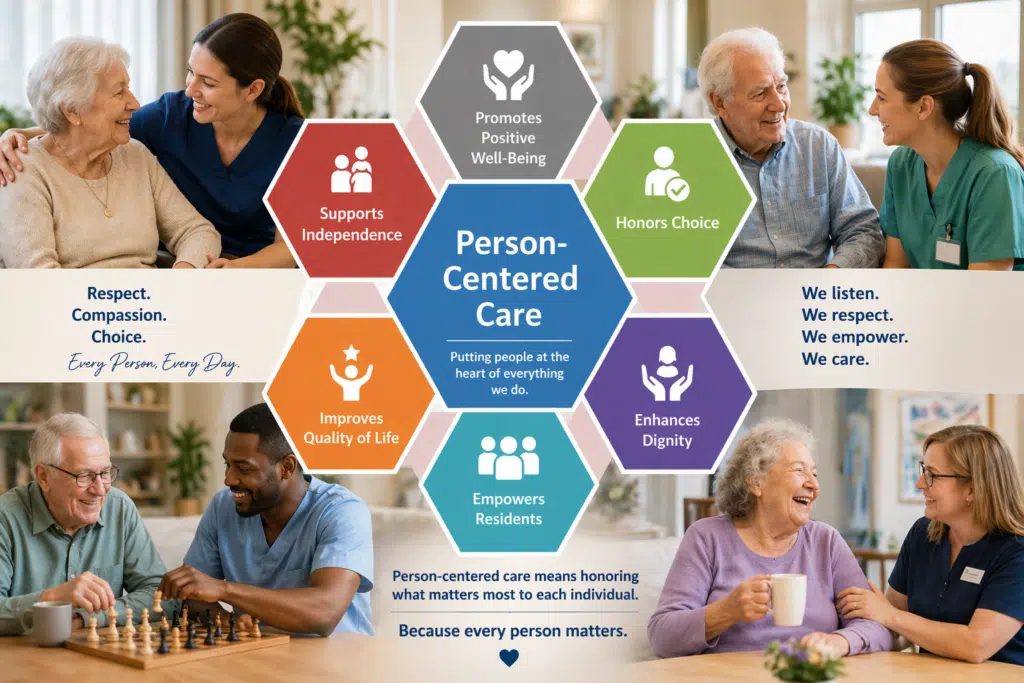
Person Centred Care: What It Really Means in Practice
Written by Stephanie Austin — Owner & Lead Trainer, Prima Cura Training
Last reviewed: April 2026 | Next review: April 2027
Person Centred Care
Person-centred care gets talked about constantly. It appears in care plans, CQC inspection reports, supervision notes, and induction programmes across the country. But step into a real care setting and watch what actually happens during a morning shift, and the picture isn’t always as clean as the paperwork suggests.
That gap between knowing the phrase and living the principle is exactly where things go wrong.
Why It Keeps Slipping Through the Cracks
I’ve been training care workers for over fifteen years, and I can tell you the moment person-centred care usually falls apart in a training room. It’s not when I ask someone to explain what it means. They can do that. It’s when I ask them to describe what it looks like at 7:30 am when there are six personal care calls to complete before handover. That’s when the room goes quiet.
I remember working through Care Certificate Standard 5 with a group of newer support workers a while back. One of them, sharp as anything, said: “I thought person-centred care just meant asking people what they wanted for breakfast.” She wasn’t being dismissive. She genuinely believed the concept began and ended at preference-gathering.
And honestly? I’ve heard that framing more times than I can count. It’s one of the most common misunderstandings in the sector, and it matters because if that’s all it is, then yes, it’s easy. But that’s not what it is. Not even close. (We address this and other myths properly in our follow-up post on common myths about person-centred care.)
What Person-Centred Care Actually Means
At its core, person-centred care means one thing: care is built around the individual, not the service. Not around shift patterns. Not around what’s quickest. Not around what worked for the last three people. Around this person, as a whole human being, with a life history, preferences, identity, and rights.
Under Regulation 9 of the Health and Social Care Act 2008 (Regulated Activities) Regulations 2014, this isn’t just good practice. It’s a legal requirement. The CQC is explicit: care must be personalised, must reflect the individual’s preferences, and must involve them in planning, managing and reviewing that care. Every registered provider in England is accountable to this standard.
| What the Law Actually Says |
| Regulation 9 requires providers to do everything reasonably practicable to ensure people receive care that is appropriate, meets their needs, and reflects their personal preferences. It also requires that the person themselves, or someone lawfully acting on their behalf, is actively involved in planning, managing and reviewing their care. This is not a recommendation. It is a fundamental standard. Source: CQC Regulation 9 Guidance |
The Principles That Actually Matter in Practice
Seeing the Person, Not the Task
Care routines exist for a reason. They create structure and make sure nothing gets missed. But when the routine becomes the point, something goes wrong. The medication round is not the goal. The person receiving their medication safely and comfortably is the goal. Those two things can look identical from the outside and feel completely different to the person on the receiving end.
Person-centred care means knowing who you’re caring for. What matters to them? What do they find undignified? How do they like things done? That knowledge doesn’t appear in a checklist. It comes from relationship, communication, and actually paying attention.
Involving People in Decisions
Care should never feel like it’s being done to someone. Even where significant support is needed, the person still has a right to be asked, to be listened to, and to be part of decisions about their own life. This applies to small daily choices just as much as major care decisions.
The Mental Capacity Act 2005 is clear that a person must be assumed to have capacity unless it has been established that they lack it, and that people have the right to make decisions others might consider unwise. Person-centred care sits squarely within this framework. Involvement is not conditional on the person making the choice we’d prefer.
Respecting Choice, Including Difficult Ones
This is where person-centred care can get uncomfortable. Not every choice is one that the people delivering care would make themselves. And that’s fine. The role of the care worker is not to manage people into safer or more convenient decisions. It’s to support them to exercise their rights while managing risk proportionately.
The question to ask is not “is this choice risky?” but “do they have the capacity to make this choice, have they been given the information they need, and have I done what I can to mitigate the risks involved?”
Supporting Independence Rather Than Replacing It
There’s a version of care that looks helpful but isn’t. Doing things for someone that they can still do for themselves, even if it takes longer, is not good care. It’s a shortcut that quietly erodes confidence, ability, and identity.
The right question is: what can this person still do, and how do we support that? Not “how do we get this done faster?” It’s a subtle shift in framing, but the difference in outcomes over time is significant.
Focusing on What Actually Matters to the Individual
Physical needs are only part of the picture. Person-centred care also means understanding what someone’s daily life looks like, what gives them a sense of self, and what their routines have always been. For one person, that might be a cup of proper tea made in a very specific way. For another, it might be maintaining contact with family, or being able to pursue a hobby they’ve had for forty years.
These aren’t extras to add when there’s time. They are part of the care, full stop.
Care Plans That Reflect Real Life
A person-centred care plan should be able to answer this question: could someone who had never met this person read this plan and understand who they are, what they value, and how to support them well? If the answer is no, the plan isn’t person-centred. It’s administrative.
Care plans also need to change as the person changes. A plan that was accurate two years ago and hasn’t been reviewed since isn’t a tool. It’s a liability.
What Good Looks Like in a Real Setting
You can usually tell within a few minutes of walking into a care setting whether person-centred care is actually happening. It’s not in the paperwork. It’s in how staff talk to people, whether they’re speaking with them or at them, whether they’re adapting to someone’s pace or pulling them along at their own, whether residents or service users are making choices throughout their day or having the day happen to them.
| You’ll see | Staff speaking with people, not over them. Care delivered at the person’s pace. Individuals making choices, even small ones. Flexibility when routines don’t fit. |
| You’ll notice it’s missing when | Care feels rushed and task-driven. Everyone seems to receive the same support in the same way. Staff fill in the blanks rather than asking. Care plans don’t reflect the person in them. |
The Common Mistakes That Undermine It
None of the following usually comes from bad intentions. Most of the time, they come from pressure, understaffing, poor training, or just habits that have formed over time. But they do impact care quality, and CQC inspectors are trained to spot them.
- Over-reliance on routine rather than adapting to the individual’s needs on that day
- Generic care plans that describe conditions, not people
- Assuming preferences rather than asking, particularly as needs change
- Not updating plans when the person’s needs, capacity, or preferences change
- Task-based thinking, where the focus is on completing the shift rather than caring for the person
How This Links to the Care Certificate
Person-centred care is the backbone of Care Certificate Standard 5. But understanding it in theory is not the same as being able to apply it when it’s 7 am, the team is short, and you have fifteen minutes to get someone ready. That’s where training makes a genuine difference.
If you’re supporting staff through the Care Certificate, this is one of the areas where you need to go beyond the workbook. Staff need to be able to reflect on their practice, identify where task-based habits are creeping in, and understand both the “what” and the “why”. Our full Care Certificate guide covers all 16 standards in depth if you want to look at the broader picture.
| The Standard 5 Essentials |
| Under Standard 5, workers need to demonstrate that they can: Understand the principles of person-centred care and what they mean in practiceSupport individuals to make choices and be involved in decisions about their careWork in ways that promote independence and respect rightsUnderstand the link between person-centred care and the Mental Capacity Act 2005 |
FAQs
What is person-centred care?
Person-centred care means delivering care that is tailored to the individual’s needs, preferences, and values rather than following a standardised approach.
What is Regulation 9 person-centred care?
Regulation 9 requires care providers to ensure care is personalised, appropriate, and involves the individual in all decisions about their care.
How does person-centred care link to the Care Certificate?
It forms the foundation of Standard 5 and underpins all other care practices.
Where Training Makes the Difference
When care workers understand not just what person-centred care is, but why it actually changes outcomes for the people they support, you get something different. You get staff who spot when a care plan hasn’t been updated in eight months and flag it. Staff who notice when someone seems to be losing independence they didn’t need to lose. Staff who ask the question rather than assume the answer.
That shift in mindset doesn’t happen from reading a definition in a workbook. It happens when training is grounded in real scenarios, when people have space to reflect on their own practice, and when they understand the regulatory context they’re working in.
| Want to talk about how Prima Cura can support your team with person-centred care training? Get in touch at info@primacuratraining.co.uk or call 0333 999 8783. |
This article is intended for educational purposes only and reflects current UK guidance and best practice at the time of writing. It is not a substitute for formal training, workplace policies, or professional advice. Person-centred care should always be delivered in line with your organisation’s procedures, the Health and Social Care Act 2008 (Regulated Activities) Regulations 2014, and relevant legislation such as the Mental Capacity Act 2005. Where there is any uncertainty, always seek guidance from a qualified professional or your organisation’s management team.